
This page includes affiliate links. If you buy through them, we may earn a commission, at no extra cost to you. As an Amazon Associate I earn from qualifying purchases. See our affiliate disclosure. We do not accept payment for rankings.
This article is general information, not veterinary advice, and is not a substitute for professional veterinary care. If your animal is in pain, distressed, or showing sudden changes in eating, drinking, toileting, or behaviour, contact a veterinarian promptly.
Fit, safety, and training notes below follow public guidance from VCA Animal Hospitals (a veterinary hospital network) and the official product pages we fetched on 29 November 2026. We have not conducted our own fit trials. This is general information, not a diagnosis of tracheal or neck disease.
If you have just brought a puppy or a small adult dog home to a high-rise, the shop may have sent you out with a collar, a lead, and a bag of food. That is a normal starting kit. It is not always the kindest way to walk a dog through a lobby, a lift, and a pavement full of scooters.
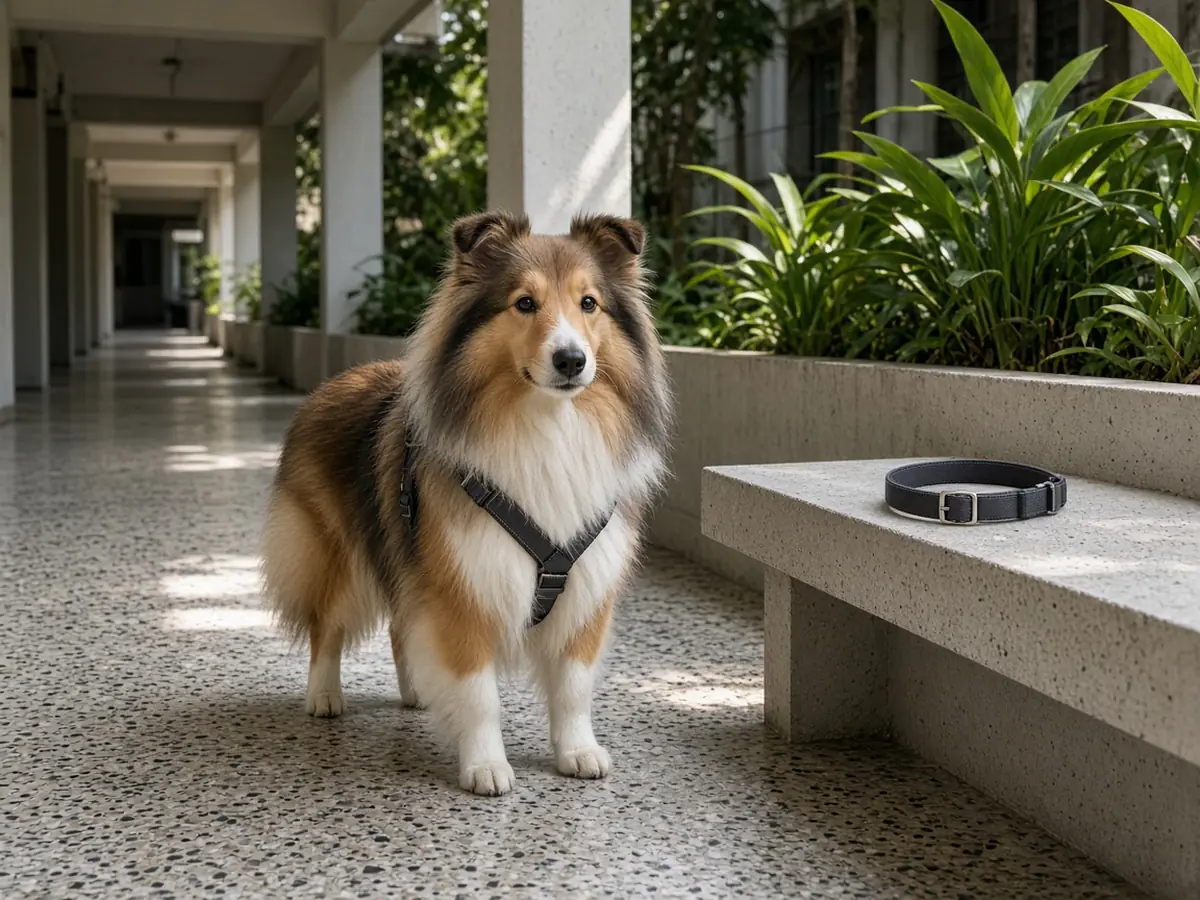
A flat collar is still useful — especially for an ID tag, which many cities expect you to have on the dog. For the walk itself, a well-fitted harness usually keeps pressure off the throat. That matters more than it first appears. Small breeds common in Asian apartments can be prone to coughing if a collar sits tight and the dog lunges at a cat, a food stall, or a sudden noise. You do not need a large suburban pavement to face that problem. A ten-minute loop around the block is enough. If you are also shopping for the best dog harness for city walks, start with girth, clip position, and a secure fit in a lift lobby, not with a specialist hiking design.
This guide is for first-time owners comparing harness vs collar for city walks. It explains the difference in plain language, then names two official harnesses with clear size charts: Ruffwear’s Front Range, which has both a front and a back leash clip, and PetSafe’s Easy Walk, a lighter front-clip design aimed at dogs who pull. Neither replaces training, and neither is a treatment for a cough. If your dog sounds hoarse, gags on the lead, or has a diagnosed tracheal problem, ask a veterinarian before you buy gear.
Walks in humid weather have their own limits; see our guide to keeping dogs cool in hot, humid weather before you add a long outing to a first-year routine.
A simple way to think about it
A flat collar sits around the neck. It is the right place for a name tag and a licence tag. VCA’s public overview is clear that if a dog pulls hard against a collar, pressure can reach delicate structures in the neck. A loose collar can also slip off in a lift lobby — a genuine risk with a small, wriggly dog.
A body harness wraps around the chest and shoulders, so a lead tugs on a broader, sturdier area. VCA describes a well-fitted body harness as putting minimal pressure on delicate tissue, and as a strong choice for dogs with tracheal disease or neck pain. Some harnesses clip on the back (a standard walk), some on the chest (useful if the dog pulls, because a gentle steer turns the dog toward you), and some offer both.
A front-clip or “no-pull” harness is still a harness, not a shock or a choke. PetSafe’s Easy Walk, for example, uses a martingale loop at the chest that tightens gradually across the shoulders when the dog pulls, and official copy emphasises that it rests on the chest rather than the throat. It can help you teach nicer manners. It does not replace treats, patience, or, if pulling is severe, a qualified trainer.
VCA also advises you to avoid tools that are designed to hurt: prong collars, choke chains, and electronic shock collars. You do not need them to walk a city dog well.
Who this is for
This guide is written for new owners whose dog lives in an apartment, takes lifts, and does most of its walking on pavements, in housing estates, or in a park a short taxi or bus ride away. If you are in your first year, you do not need a specialist hiking harness. You need something you can put on in a hallway, that will not slip off in a lift, and that you can fit using a tape measure.
Speak with a veterinarian or a force-free trainer first if:
- your dog already coughs, honks, or gags on a collar
- the dog can wriggle out of every harness you have tried
- you have been told the dog has a collapsing trachea, a neck injury, or a shoulder problem
- you are considering a head halter and have not been shown how to introduce one slowly
A harness is equipment. It is not a diagnosis, and it is not a substitute for teaching the dog that the lift is boring and the lead is not a tug-of-war.
What actually matters in a city apartment
1. Measure the rib cage, not the neck, for a harness. Official size charts for both harnesses below use girth — the widest part of the chest, usually just behind the front legs. A weight range on a packet is only a rough clue. If you are between sizes, Ruffwear officially says to choose the larger size; PetSafe says the same, and notes that its weight bands are approximate.
2. Decide where the lead should clip. A back clip is simple for a dog that already walks loosely. A front clip gives you more steering in a crowded walkway. A harness with both, such as the Front Range, lets you switch as your first-year walks get calmer.
3. Think about the climate. Many walks in Hong Kong, Singapore, Kuala Lumpur, or Taipei happen in sticky air. A lighter, more open harness (PetSafe officially highlights breathable, lower coverage on the Easy Walk) can be more comfortable than a heavily padded vest, provided it still fits securely. On very hot days, shorten the walk rather than adding gear.
4. Practise indoors first. VCA’s guidance is to introduce a collar or harness gradually in a quiet space, and to supervise while it is on. Put the new harness on in the flat, feed a meal, walk to the door and back, then try the lift lobby at a quiet hour. A first walk on a busy Saturday pavement is a hard exam.
5. Keep a collar for ID, not as the main walking tool. In many buildings and cities you will want a tag the dog cannot wriggle off. A snug flat collar with tags, plus a harness for the lead, is a normal combination. Do not attach the walking lead and a retractable line to two different people at once; that is how shoulders get wrenched.
If you also worry about weight on short city walks, start with how we think about food for small apartment dogs, not with a tighter collar.
Quick comparison
| Option | Role | Official clip | Official sizing (starting point) | Best for |
|---|---|---|---|---|
| Flat collar (any simple buckle or clip collar) | ID tags, not the main walking tool if the dog pulls | Neck ring | Two fingers under the collar, not so loose it slips off | Everyday tags in the flat and the lift |
| Ruffwear Front Range Harness | Padded everyday harness | Front and back leash attachments | Girth from XXS 33–43 cm to L/XL 81–107 cm | Most first-year city dogs, especially if you want both clip positions |
| PetSafe Easy Walk Harness | Lighter front-clip, no-pull design | Chest only | From Petite (girth 12–17 in / about 30–43 cm); four adjustment points | Dogs that already pull, and owners who want a more open, breathable fit |
The picks
Ruffwear Front Range Harness — a first everyday harness
The Front Range is a padded everyday harness with a front leash attachment as well as a back one, which is the combination most new city owners actually need. You can clip at the chest for a pulling phase, then move to the back as the dog settles. Official sizing is by rib-cage girth, starting at XXS (33–43 cm), which covers many of the small dogs that live in apartments here. If you are between sizes, Ruffwear’s official chart says to take the larger one.
We have not fit-tested it ourselves. What the official store page gives you is a clear size table, a padded everyday design, and a price we fetched on 29 November 2026 (see the card). Stock and colours change; measure first, then confirm the live listing. Ruffwear is a well-known outdoor brand, but you do not need a mountain trail to use this harness in a housing estate.
PetSafe Easy Walk Harness — if pulling is already the problem
If your new dog has already learned to tow you toward every smell, a dedicated front-clip design is a reasonable first upgrade. PetSafe’s official materials say the Easy Walk was designed by a veterinary behaviourist, has been sold since 2004, and uses a patented martingale loop that tightens gradually across the shoulders when the dog pulls. The lead attaches at the chest so you can steer. Official copy is explicit that the harness sits on the chest rather than the throat, and that the belly strap is a different colour so you can tell the pieces apart when you are dressing a wriggly dog in a hallway.
Four official adjustment points help you get a close but comfortable fit. Sizes start at Petite, officially for a chest width of 7–8 in and a girth of 12–17 in (about 30–43 cm), with an approximate weight under 10 lb — useful for the very small dogs common in city flats. The official design is also more open and breathable than many fuller harnesses, which is welcome in humidity.
A no-pull harness is a steering aid. Pair it with treats and short, calm practice, not with a sharp jerk in a crowded walkway.
How to fit one in a small hallway
Use a soft tape measure around the widest part of the rib cage, then open the official chart. The harness should be snug enough that the dog cannot reverse out of it, without rubbing behind the elbows or pinching the armpits. After a short indoor session, check for red marks. VCA notes that some designs sit over the shoulder joints and can restrict movement if they are a poor match for the dog’s shape — if the gait looks shorter or the dog is reluctant to walk, stop and refit, or try another style.
Take the harness off when you cannot supervise. VCA’s public advice is that dogs can become entangled at play, and that a harness is best removed when you are not watching. In a compact flat, that usually means on for the walk, off in the crate or on the sofa.
When you travel by taxi or a ride-hailing car, keep the harness on and the lead short as you get in and out. The lift and the car door are the two places first-year dogs most often slip loose.
Where to buy, and what to check
Start with the official product page so you have the correct size chart, then look for current stock on official regional stores or on Amazon.sg and other retailers you already use in your city. We do not invent listing codes here, and we do not promise that a size or colour is in stock in Singapore, Hong Kong, or Malaysia. Check the size, the colour, the return policy, and — if a package includes a charger or a different accessory — that it matches your country’s plug and voltage. A harness itself has no plug; a shipping delay from an overseas official store is the more common issue. A local pet shop that will let you measure the dog is often worth the trip in the first year.
FAQ
Can I just walk my dog on a collar?
Plenty of people do, especially if the dog is calm and the collar fits well. If the dog pulls, coughs, or has a short muzzle and a delicate neck, a harness is the kinder default. Keep the collar for tags either way.
Will a harness stop pulling on its own?
No. A front clip can make pulling less rewarding because the dog is turned toward you. You still need short practice sessions and rewards for walking near you. If you are stuck, look for a reward-based trainer, not a tighter collar.
My puppy hates having the harness put on. What should I do?
Go slower. Practice touching the chest, then sliding one strap, then feeding dinner in the half-on harness, over several days. VCA’s advice is to introduce equipment gradually in a quiet space. Forcing it on at the door, once, often makes the next week harder.
Are head halters better?
They are a different tool, with a strap around the muzzle, and many dogs need a careful introduction. VCA lists real risks if they are jerked or used with a retractable lead. They are not the first thing we would hand a new owner in a busy lift lobby. If someone has recommended one, ask them — or a veterinarian — to show you the fit.
Verdict
For most first-time owners walking a small or medium dog through a city apartment building, use a flat collar for ID tags and a well-fitted harness for the lead. Start with the Ruffwear Front Range if you want a padded everyday harness with both a front and a back clip and a girth chart that begins at 33 cm. Choose the PetSafe Easy Walk if pulling is already the daily problem and you want a lighter, chest-clip design with very small official sizes.
Measure the chest, practise indoors, and ask a veterinarian if your dog coughs or has a known neck problem. The goal of a first-year walk is a calm loop and a safe lift ride, not a perfect heel on day one.
This page includes affiliate links. As an Amazon Associate I earn from qualifying purchases. See our affiliate disclosure.
Related guides
How to keep dogs cool in hot, humid weather
How cooling mats, water beds, and evaporative vests work in humidity, plus practical heat safety for apartment dogs. Dated official prices included.
Read the guide
How to choose dog food for small apartment dogs
How to choose small-breed dog food for apartment life: portions, WSAVA-style questions, and complete diets from Royal Canin and Hill’s.
Read the guide
Dog nail grinder vs clippers
A first-year comparison of a dog nail grinder vs clippers for new owners in city apartments: when nails are long, how the tools differ, and two official examples.
Read the guide