
Product links on this page are not affiliate-tagged, so a click does not earn us a commission. See our affiliate disclosure. We do not accept payment for rankings.
This article is general information, not veterinary advice, and is not a substitute for professional veterinary care. If your animal is in pain, distressed, or showing sudden changes in eating, drinking, toileting, or behaviour, contact a veterinarian promptly.
We have not load-tested window nets, insect screens, or balcony mesh, and we have not installed these systems in a test flat. Safety guidance below is taken from official pages we opened on 29 November 2026 (Asia/Hong_Kong), including SPCA Singapore, SPCA Hong Kong, Singapore’s Animal and Veterinary Service, and Hong Kong’s Agriculture, Fisheries and Conservation Department. Product descriptions are from official brand or installer pages opened the same day. This is general information, not a building-safety certificate, and not a substitute for professional installation or for veterinary care after a fall.
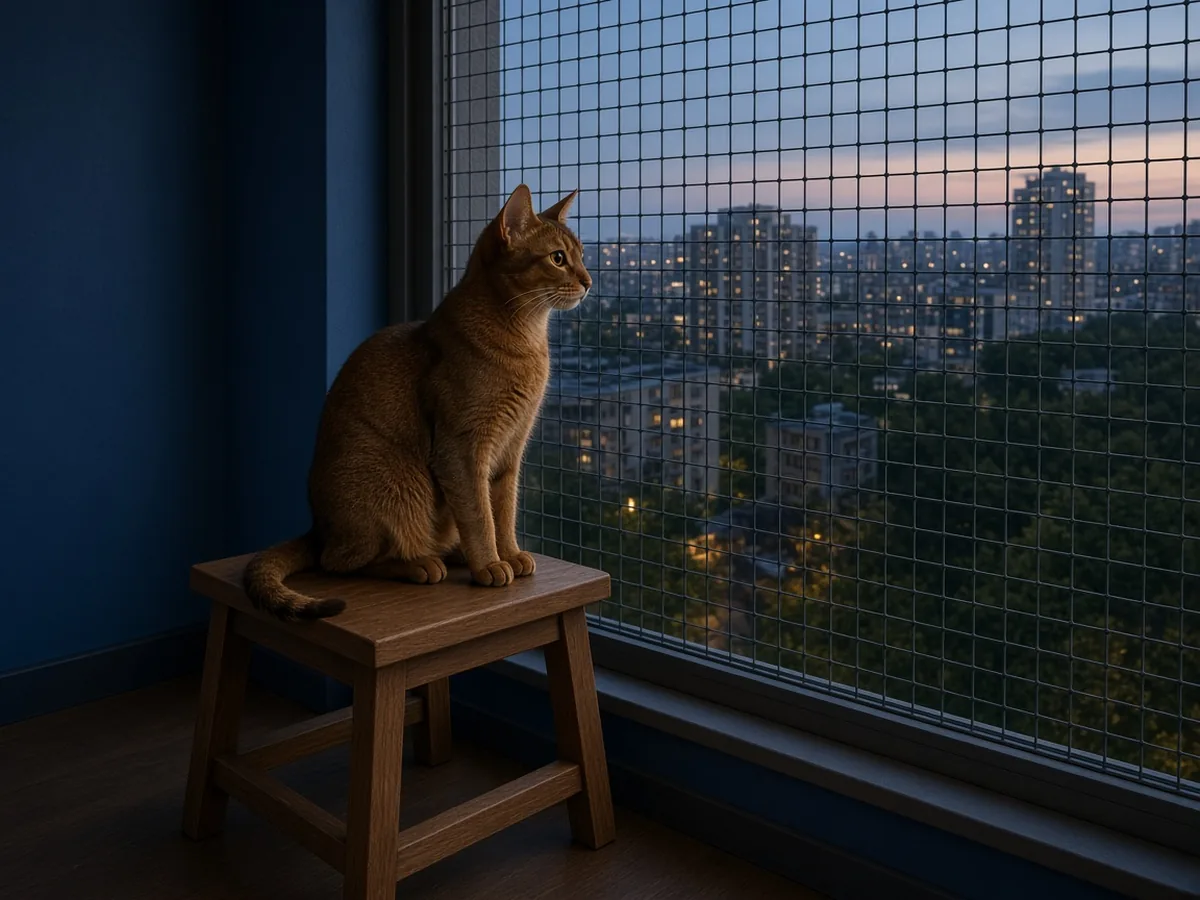
If this is your first cat in a Singapore, Hong Kong, or Malaysian high-rise, learning how to cat-proof windows — and how to cat-proof a balcony — is not a decoration decision. It is one of the first things to get right, before you worry about a prettier tree or a new toy. Cats sit on sills. They watch birds. They slip. “They always land on their feet” is not a plan.
You do not need a branded catalogue purchase in the first week. You need every openable window and every balcony door the cat can reach to be secured in a way that will still be there when the cat hits it at a run. In these cities that usually means a made-to-measure net or grille, installed to the actual frame, not a tension rod and a hopeful roll of ordinary mosquito mesh.
Who this is for
This is for a new indoor cat — kitten or adult — in a compact high-rise or walk-up, including rentals where you cannot drill without permission, and including flats that already have insect screens or child bars.
It is also for households that already have a cat and have been leaving a window on the latch “just for air.” In a humid city that habit is understandable, and it is still a fall risk.
Get urgent veterinary help, not shopping advice, if a cat has already fallen or is trapped on an external ledge. In Hong Kong, SPCA’s published 24-hour animal-rescue and inspector hotline is 2711 1000. In Singapore, take the cat to your nearest emergency clinic; the number published on SPCA Singapore’s High Rise Syndrome page, +65 6287 5355, is the organisation’s general contact, not a 24-hour rescue or emergency-vet line. The same organisation’s homepage, checked the same day, lists 6287 5355 ext 9 as a 24/7 emergency rescue hotline for a sick, injured, or distressed animal. These numbers are quoted as of 30 November 2026 and should be re-checked if you need them.
Why this is a first-year problem in Asian cities
Singapore’s Animal and Veterinary Service, on its licensing-requirements page last updated 13 October 2026 (opened 29 November 2026), requires licensees to keep a cat or dog in a safe environment and to “prevent the cat or dog from being in any place which exposes the dog to the risk of falling from height e.g. meshing of windows.” The same page also says the animal must be properly confined, and that cats must be kept under physical control in a public space. That is official government language, not a lifestyle tip. AVS’s separate cat-care page (last updated 1 October 2026) also says cats should be kept safely indoors, with enrichment so indoor life is still a decent life.
SPCA Singapore’s High Rise Syndrome campaign page (updated April 2023; opened 29 November 2026) describes high-rise syndrome as injuries from falling from height, and says a fall from as low as the second floor can cause severe injury or death. The page states that SPCA receives at least five feline high-rise cases a week, with at least half dying on impact — about 260 cases and 130 fatalities a year in the cases SPCA itself sees, with the organisation noting that overall figures could be higher. The same page calls “cats always fall on their feet” a myth, describes typical injuries, and says animals do not choose to jump: a bird or a sudden noise can be enough to make them slip. SPCA Singapore’s first advice is to mesh windows, doors, and balconies, and that the mesh must be secure enough not to give way when an animal runs into it at full force.
In Hong Kong, SPCA’s “10 Common Cat Accidents” article (Pawprint Issue 123, September 2024–February 2025; opened 29 November 2026) puts window and balcony netting first. It says that in 2023, SPCA inspectors handled 264 rescues involving cats falling out of windows or trapped on window ledges, and that most of those cases could have been avoided with netting over windows and screen doors to the balcony. It also says not to leave cats unsupervised when windows and balcony doors are open, even if netting has been installed.
Hong Kong’s Agriculture, Fisheries and Conservation Department, on its official “Proper Care” page for cats (opened 29 November 2026), includes “Windows with grilles” on the basic equipment checklist, alongside a litter box, a bed, and a scratching post. That is a short line, and it is official: a window the cat can reach should not be an open hole.
None of these sources ask you to choose a pretty insect screen and hope.
What actually matters
The most useful checklist we opened, written for Hong Kong homes, is from Paws United Charity’s page “What makes a good and qualified window net?” (opened 29 November 2026). It is a welfare charity’s standard, not a government regulation, but the four tests are practical and they match the SPCA emphasis on strength and gaps:
1. Coverage. Every easy-to-reach openable window needs to be made safe — including bathrooms, kitchens, and bedrooms — unless a room is truly shut in a way the cat cannot defeat. Paws United notes that higher windows you never open can be fastened closed instead, and that cats tend to enter “off limits” rooms anyway.
2. Hardness. The net must be rigid. Paws United says fabric-based netting is unacceptable because it will eventually tear, and that flexible or soft mesh (it gives plastic mesh and “metal barbecue mesh” as examples) is a bad idea, because a persistent cat will work at anything that moves. The charity prefers a heavy-duty metal grid.
3. Fixing. The net must stay put in a way that does not weaken over time. Paws United accepts examples such as plastic zip-ties, screws into the frame, and purpose-made latches or hinges. It is wary of wire twist ties, adhesive sticky pads, and Velcro. Fixing points should be close to the edges, and you should be able to grip the net and give it a firm shake without it coming off or opening a gap.
4. Gaps. Kittens and adult cats can squeeze through surprisingly small openings. There should be no gap at the edges — especially at the top — or where two pieces overlap. Existing child bars do not automatically protect cats; if they stand off the window, a net fixed only to the front of the bars can leave a gap around the edge.
SPCA Singapore adds a blunt performance test of its own: the mesh should withstand an animal running into it at full force without breaking or coming apart. On the same page, a magnetic mesh is listed among unacceptable options, because it is not strong or secure enough when an animal pushes through.
If you remember only one thing: ordinary insect screening, including many “pet-resistant” replacement screens, is not the same job as a fall-prevention net.
What is not enough
The mosquito screen that came with the flat. In a humid city that screen is there for insects. It is usually thin, flexible, and held in a light frame. It is not designed for a cat’s weight at a run. Do not leave a window open “because the screen is on.”
Magnetic or stick-on mesh. SPCA Singapore flags magnetic mesh as inadequate. Paws United flags adhesive pads and Velcro as fixings that can weaken. A net you can peel off with a thumb is not a fall barrier.
A child bar or window limiter on its own. These may limit how far a sash opens, which can help, but Paws United is explicit that a typical child-proof barrier will not protect cats, and that poorly placed bars can even create a gap behind them. A limiter plus a properly fixed net is a different system from a limiter alone.
A “pet-resistant insect screen” used as if it were a high-rise safety net. Phifer’s official PetScreen page (opened 29 November 2026) describes a vinyl-coated polyester insect screening sold in rolls, marketed as tear- and puncture-resistant for dogs and cats, for use in patio and porch enclosures, windows, and screen doors. Official technical data on that page includes a mesh weight of 11.2 oz/yd² (380 g/m²), a thickness of 0.036 in (0.914 mm), and an openness factor of about 36%. That is a heavier insect fabric, not a rigid, edge-sealed, shake-tested fall-prevention grid of the kind Paws United prefers. We are not recommending it as a high-rise cat net, and we did not find a dated retail price on the official page we opened. If someone offers to “just swap the flyscreen,” ask whether the finished installation meets the hardness, fixing, and gap tests above when a cat hits it.
An open balcony “only when I am there.” SPCA Hong Kong’s advice is not to leave cats unsupervised at open windows and balcony doors even when netting is installed. Supervision is not a substitute for a door the cat cannot bolt through when the doorbell rings.
Furniture, trees, and the window as a launch pad
A compact cat tree or a run of wall shelves is a good indoor substitute for height. It becomes a problem if it sits under an unsecured window or beside a balcony door, or if a shelf ends on a sill that is still open to the drop. Place climbing furniture on a safe wall, and treat any route onto a sill as a reason to net that window first.
The same applies to drying racks, air-conditioner shelves, and the top of a fridge near a service-yard door. If the cat can get there, the opening needs to be secured, or the furniture needs to move.
AVS is also clear that indoor cats still need enrichment — scratchers, platforms, hiding places, play — so that “kept indoors” is not the same as “bored in a box.” Safety and a decent indoor life are the same project.
A cat balcony net, and how people actually get one fitted
A cat balcony net is the usual product name for the made-to-measure mesh or grille that makes a balcony door, and the windows beside it, safe to open. In Singapore, Hong Kong, and many Malaysian cities, a safe installation is usually measured to the existing aluminium or steel frame, then fixed or hinged so you can still open the window for cleaning or for a fire escape plan your building allows. That is why this guide does not shortlist a single mail-order panel and call it done. A panel that does not match the frame will leave the gaps that cause the trouble.
Typical options, in plain language:
- A rigid metal mesh or grille, hinged or lift-out, with small openings and edge-to-edge fixing. This is closest to what Paws United prefers, and it is close to AFCD’s “windows with grilles.”
- A lockable screen door or rolling/folding balcony door mesh, so you can open the door without handing the cat the balcony. A balcony needs the same standard as a window, including the lock, because a clever cat will learn a latch.
- Fastening shut any high window you do not need to open, if that is the more honest solution.
Rental constraints are normal. Ask the landlord or building management, in writing, before you drill. Some systems are marketed as no-drill or low-mark installations; those are only acceptable if they still pass the shake, gap, and full-force tests, not because they are convenient for a deposit inspection. If you cannot fix a proper net to a particular window, keep that window closed and use another opening that can be made safe. Fire safety still matters: do not block a required escape route, and ask your building what is allowed.
For Hong Kong readers, made-to-measure window and balcony nets are a common local service. Two official company pages we opened on 29 November 2026, as examples of that trade rather than as a tested ranking, are DF Creative Home’s cat-proof window net page and PETNAR LIVING’s cat-net page. Both describe custom measuring and installation, including rental-friendly or no-drill options on the PETNAR page, and both are quote-based. We are not repeating their marketing test claims, we have not inspected their work, and we found no single dated retail price we could quote. If you use a local firm, take the SPCA and Paws United tests with you: rigid enough, fixed at the edges, no gaps, lockable where a door is involved, and able to take a firm shake and a cat at a run. Ask what happens in a fire, how the net is cleaned, and whether removal at the end of a lease is possible.
For Singapore and Malaysia, use the same tests with a local installer or a grille contractor who will come to measure. We did not open an official Singapore or Malaysia product page we were willing to treat as a like-for-like shortlist, so we are not inventing brand names for those cities. SPCA Singapore’s campaign remains the public reference: mesh the openings, and do not use a magnetic mesh.
There is no honest official price we can publish for a custom net, because the work is quoted to the window. Be wary of a solution whose only virtue is that it is cheap and ships in a small box.
If the worst happens
A fall is an emergency. Move the cat only as a veterinarian or a trained rescuer advises if you suspect spinal or chest injuries, and get to an emergency clinic. SPCA Singapore notes that survival chances rise with immediate medical intervention, and that many published survival figures exclude animals that were already dead on arrival. Do not wait to “see if it walks it off.”
If a cat is trapped on an external ledge, do not lean out after it in a way that puts you at risk. Call a professional rescue service or, in Hong Kong, the SPCA hotline above, and keep people from startling the cat.
FAQ
My flat already has a mosquito screen. Is that enough?
Usually not. Insect screens are built for insects. The official welfare sources we opened ask for something that stays put when a cat hits it, with no squeeze gaps. Treat an existing flyscreen as air-and-mosquito control, not as a fall net, unless an installer can show you that the finished frame meets those tests.
Can I just keep the windows closed and use air conditioning?
Closed windows that the cat cannot open are safer than open ones with a weak screen. Many households will still want some ventilation in a humid climate, and bathrooms and service yards often have openings you forget. Secure every reachable opening, or fasten shut the ones you will not net.
We are renting and cannot drill. What can we do?
Ask for written permission first. Look for a professional installation that can be fixed without damaging the frame and still pass a firm shake and gap check — “no drill” is not automatically “secure.” If a particular window cannot be made safe, keep it closed. Do not rely on adhesive pads or Velcro.
Is a balcony all right if I am standing there?
SPCA Hong Kong’s published advice is not to leave cats unsupervised at open windows and balcony doors, even with netting. A balcony should have a lockable, full-coverage barrier if the cat will ever have access to that door. Supervision fails the moment the doorbell rings.
Will a cat tree replace the need for nets?
No. A tree is indoor height, and a good idea. It does not make an open window safe, and it can make a sill easier to reach. Net first, then place the tree on a safe wall. See our cat trees and shelves guide.
What about a dog in the same flat?
AVS’s licensing language covers cats and dogs and gives meshing of windows as an example of preventing falls from height. A small dog can also go over a low balcony threshold. The same openings should be secured. A magnetic patio mesh is not a shortcut here either.
Verdict
In a high-rise, the first “buying guide” for a new cat is not a toy. It is a way to make every reachable window and balcony door fail safely when the cat is curious, startled, or careless. Official sources in Singapore and Hong Kong are already aligned on that point: keep cats indoors, mesh or grille the openings, and do not trust an ordinary screen. Use a rigid, edge-fixed, gap-free installation you have had measured to the frame, and treat magnetic, adhesive, and fabric insect screens as the wrong tool for this job. Then put the tree, the litter box, and the rest of indoor life in a home the cat cannot fall out of.
Product links on this page are not affiliate-tagged, so a click does not earn us a commission. See our affiliate disclosure. We do not accept payment for rankings.
Related guides
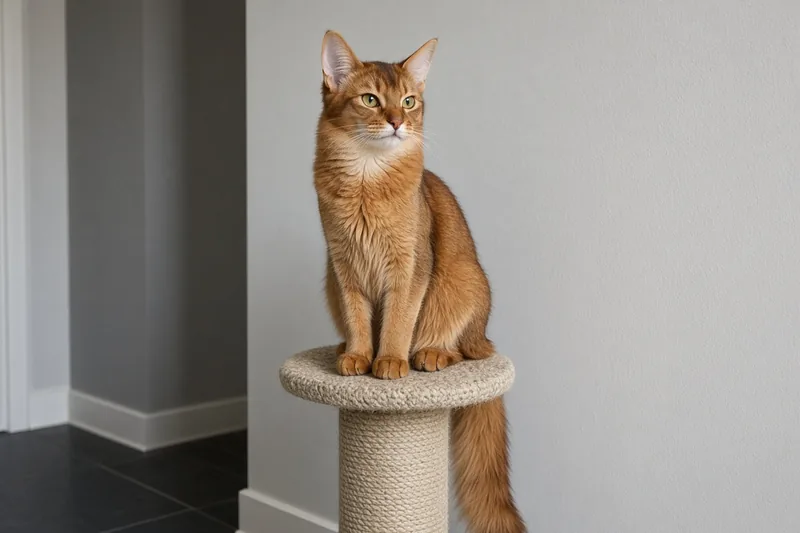
Best cat tree for small apartments
Add vertical space for an indoor cat without filling the floor — height and footprint first, with a compact Catit tree and MYZOO wall shelves.
Read the guide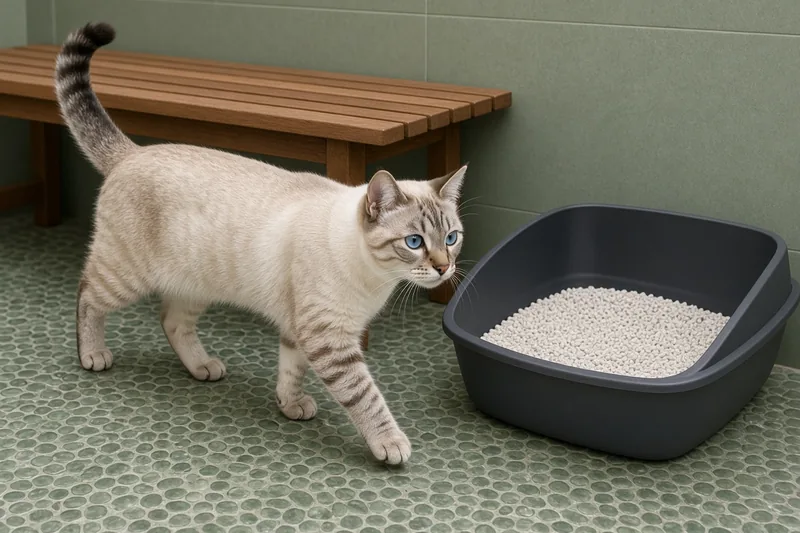
Best litter boxes for small apartments
How to choose a litter box for a compact, humid city flat: an open high-sided tray, a compact top-entry cube, or a large self-cleaning machine, with criteria first.
Read the guide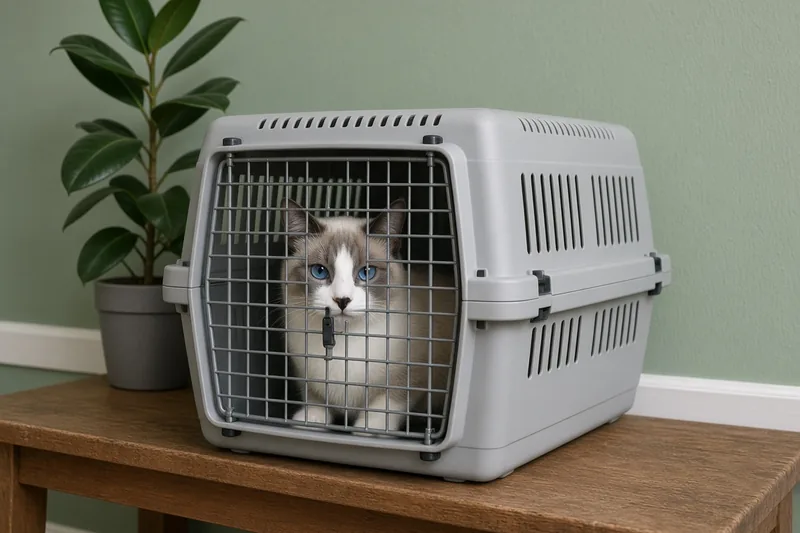
Best pet carriers for vet visits and city travel
How to choose a carrier for first-year vet visits, taxis, and city travel — a hard cat carrier, a crash-tested soft bag, and a plastic kennel — with official sizes.
Read the guide